%201.png)
.png)
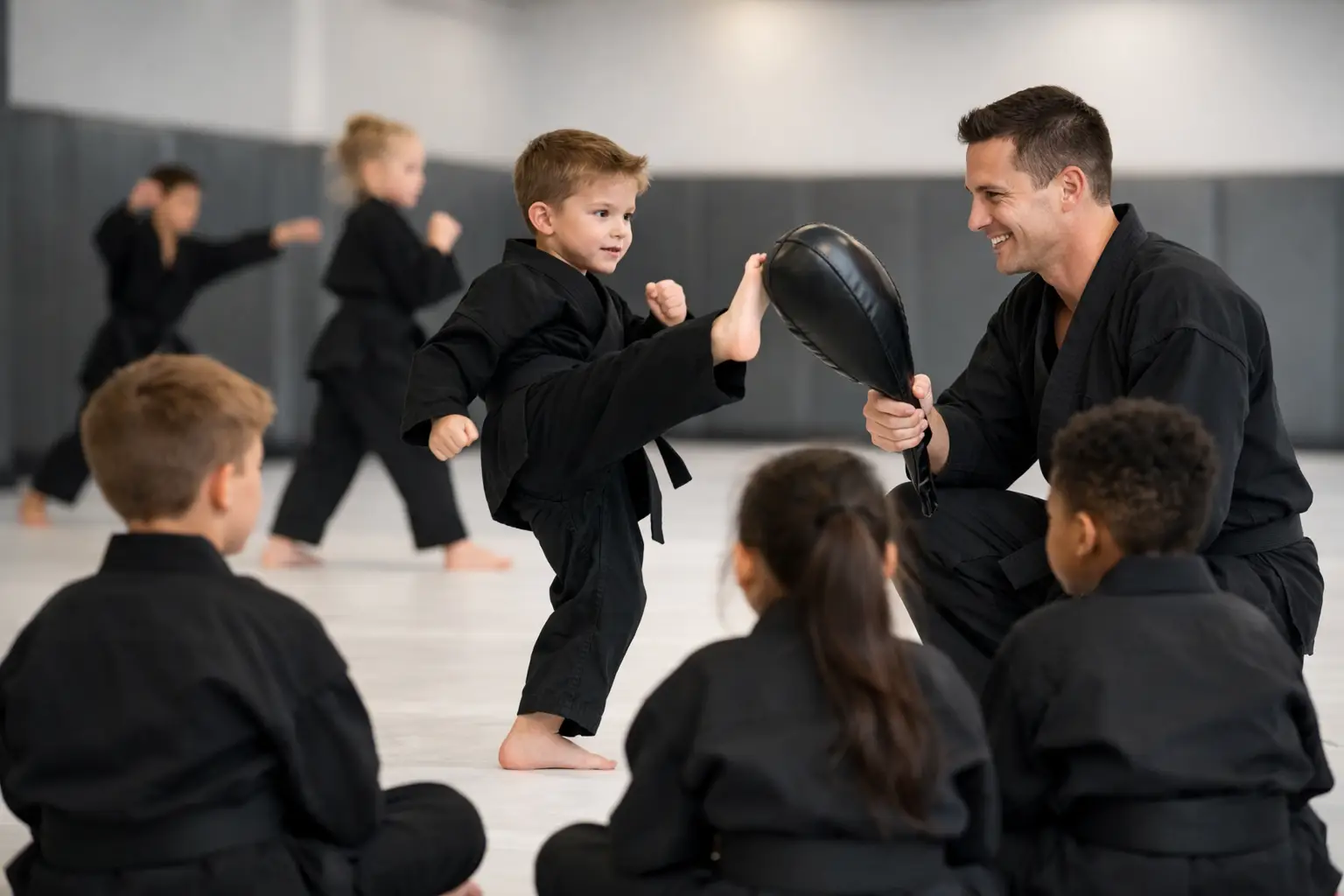
A Parent's Guide to Kids' Martial Arts Classes
A quiet child who avoids eye contact, a child with endless energy after school, or a youngster who needs help handling friendship worries can all benefit from the right class. This parent’s guide to kids’ martial arts is about looking beyond the uniform and the kicks to find training that helps your child feel safer, stronger and more confident in themselves.
Martial arts should never be about teaching children to fight. At its best, it gives them practical boundaries, better body awareness and the self-belief to deal with challenges calmly. The right programme makes training enjoyable while setting clear standards for effort, respect and behaviour.
A parent’s guide to kids’ martial arts: begin with the outcome
Before comparing class times, fees or belt colours, consider what you want your child to gain. Most parents are looking for a positive combination of physical activity, confidence and structure. Your child may be motivated by learning cool techniques, but the deeper benefits are built through turning up each week, listening carefully and seeing their own progress.
A good kids’ martial arts programme can develop coordination, balance, flexibility and general fitness. It can also give children a healthy way to release energy after a school day. Yet physical development is only part of the picture. Children learn to follow instructions, work with partners, cope when something feels difficult and try again without giving up.
That matters because confidence is not simply being loud or fearless. Genuine confidence comes from knowing, through experience, that you can learn a skill, stay composed and respond well under pressure. Martial arts creates regular opportunities for children to practise exactly that.
Safety and culture should come before style
Parents often ask whether MMA, karate, judo or another discipline is best. The honest answer is that it depends on the child and, more importantly, on the quality of the coaching. A well-run class with clear safety standards will be more valuable than a poorly managed class in the style you thought your child had to try.
For younger children and beginners, look for sessions that are structured around age-appropriate movement, controlled partner work and clear rules. Coaches should explain why a drill is being practised, demonstrate it in manageable stages and actively supervise children when they work together. Children should be taught that control is a strength, not a limitation.
The atmosphere matters just as much. A child should not be mocked for being nervous, less coordinated or new to the group. They should be encouraged to work at their own level while still being challenged to improve. The aim is a welcoming room where children learn that everyone earns progress through effort.
Mixed martial arts can be a particularly engaging route when it is taught responsibly. It offers varied skills rather than repeating one type of movement every week, which can hold the attention of children who enjoy variety. But it must be delivered as disciplined coaching, with safety, respect and self-control at the centre. There is a major difference between learning practical self-protection in a supervised class and promoting aggression. A professional children’s programme understands that difference.
What a strong first class looks like
A trial session gives you useful information that no website or timetable can provide. Watch how the coach welcomes your child. Do they introduce themselves, explain what will happen and help nervous children settle in? Do they use positive, specific feedback rather than shouting vague instructions?
Notice whether the class has a clear rhythm. Children usually do best when training includes a warm-up, skill learning, supervised practice and a calm finish. The activity should be lively, but it should not feel chaotic. There needs to be enough structure for every child to understand what is expected of them.
It is also worth observing how mistakes are handled. Martial arts involves getting things wrong at first. A child who loses balance, forgets a sequence or struggles with a technique should be corrected kindly and encouraged to have another go. That response is where resilience grows.
Speak to the coach afterwards if you have questions about class size, progression or your child’s needs. If your child has additional needs, low confidence, a previous injury or is worried about contact, a good coach will discuss suitable adjustments openly. Inclusion does not mean lowering standards. It means giving each child a fair, safe way to participate and progress.
Helping your child settle into training
The first few weeks can feel unfamiliar, even for an enthusiastic child. Some children run straight onto the mats; others need time to watch, listen and build trust. Both responses are normal. Avoid judging the experience solely by whether they come home buzzing after lesson one.
Instead, encourage a realistic commitment. Attending consistently for a few weeks gives your child time to learn the routines, recognise faces and experience a small success. That might be remembering how to stand safely, holding a pad correctly or speaking up with more confidence during a drill.
Your role is to be supportive without turning training into another source of pressure. Ask open questions after class: “What did you enjoy?” or “What felt tricky today?” Praise effort, focus and kindness to training partners, not only grades or athletic performance. This reinforces the values that make martial arts useful beyond the gym.
Practical preparation helps too. Arrive with enough time for your child to settle, make sure they have comfortable kit and water, and let the coach know about any relevant medical information. Most importantly, let your child know that nobody expects perfection. They are there to learn.
Progress is more than belts and medals
Gradings and awards can be powerful motivators. They give children a visible target and an opportunity to celebrate commitment. However, a belt should represent skills, understanding and consistent effort, not simply attendance or a rushed reward.
Look for progress in everyday life as well. Your child may stand taller, make friends more easily, show better patience at home or become more willing to attempt something difficult. They may start using a clearer voice when saying no or recognising when it is sensible to walk away from a problem. These are meaningful achievements.
Competition can be beneficial for some children, especially when they are ready for the challenge and genuinely want to take part. It is not essential for everyone. A quality programme gives children room to pursue personal development, fitness and self-protection without making them feel they must compete to belong.
Questions worth asking before you enrol
You do not need to be a martial arts expert to make a sound choice. Ask how classes are grouped by age and experience, how coaches manage contact and partner work, and what safeguarding procedures are in place. Find out how progress is assessed and whether beginners can take part without buying lots of equipment immediately.
Ask what happens if your child loses confidence or needs extra help. The answer should be practical and reassuring, not dismissive. A child who feels supported through a difficult phase often gains more from training than one for whom every session feels easy.
It is also sensible to ask about the coach’s experience working with children. Technical ability matters, but coaching young people requires patience, communication and an understanding of how children learn. The best instructors can make a room feel focused and fun at the same time.
Choosing a class your child can grow with
A great martial arts class does not promise to transform a child overnight. It offers something more valuable: a dependable place to practise effort, respect, self-protection and confidence week after week. At Outlaw MMA, children are coached in a supportive setting where beginners can build real skills without needing to be the loudest, strongest or most experienced in the room.
The best next step is often simply to let your child try a properly structured session. Give them the space to step onto the mats, meet the coaches and discover what they can achieve when someone believes in their potential.


Comments