%201.png)
.png)
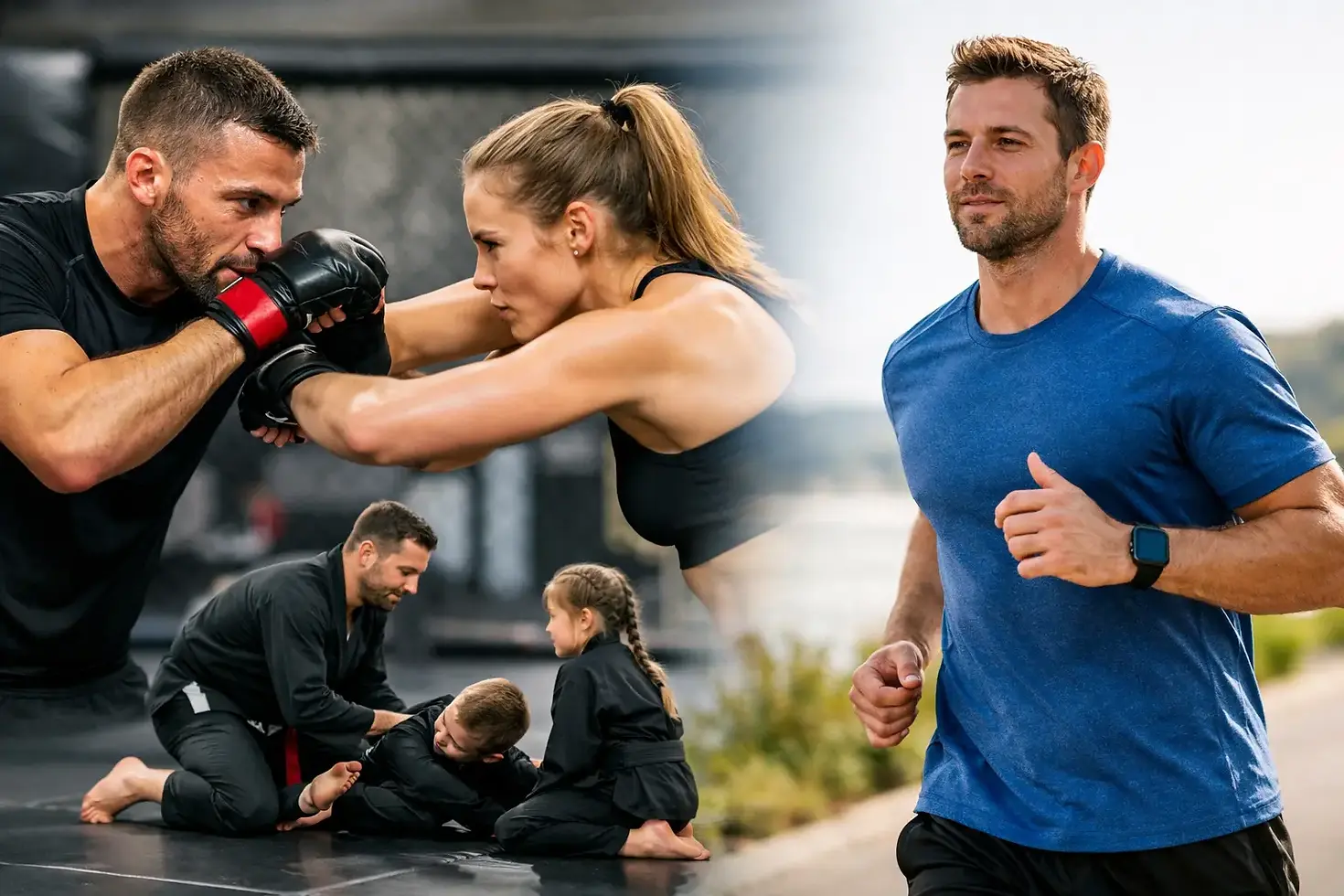
How MMA Improves Fitness Beyond the Gym
A treadmill can make you sweat. A weights session can make you stronger. But neither necessarily teaches you how to move with purpose when you are tired, under pressure and faced with a new challenge. That is where how MMA improves fitness becomes different from a standard gym routine: it develops the whole person, not just one number on a fitness tracker.
Mixed martial arts combines striking, grappling, movement, conditioning and practical self-defence. Every session asks your body and mind to work together. You build fitness that feels useful, while gaining confidence in what your body can do.
How MMA improves fitness from head to toe
MMA is not one repetitive exercise performed for an hour. Training may include pad work, controlled partner drills, wrestling movements, bodyweight conditioning and technical practice. Each part brings a different physical demand, which is why regular training can create broad, well-rounded fitness.
Cardiovascular fitness that has a purpose
MMA rounds raise your heart rate quickly. A combination on the pads, a sequence of sprawls, or a grappling drill can involve short bursts of intense effort followed by brief recovery. This type of training develops the ability to work hard, settle your breathing and go again.
That carries over into everyday life. Stairs feel less demanding, walking uphill becomes easier, and you may notice you recover faster after carrying shopping, playing with the children or completing a busy day at work. Unlike staring at a clock during cardio, MMA keeps your attention on the next technique, target or movement. For many people, that makes it easier to stay consistent.
The intensity can be adjusted, too. A complete beginner does not need to train at the same pace as an experienced competitor to improve their fitness. Good coaching helps you work hard enough to progress without turning every class into an exhausting test.
Strength built through movement
MMA develops usable strength rather than focusing only on one muscle group at a time. Punching pads requires your legs, hips, core and shoulders to work together. Clinch and grappling drills develop grip strength, posture and control. Ground movements ask you to push, pull, brace and create space from awkward positions.
This does not mean MMA replaces every form of strength training. If your main goal is lifting the heaviest possible barbell, a dedicated weights programme will be more specific. However, MMA builds strength in a way that supports balance, coordination and athletic movement. It is particularly valuable for adults who want to feel stronger in daily life, not simply improve a lift.
Better core control, balance and mobility
Your core does more than create visible abdominal muscles. In MMA, it helps transfer force through a punch, keeps you stable when changing direction and supports your posture during grappling. Training these movements regularly can improve body control in a practical way.
Balance and mobility matter just as much. Kicks, defensive footwork and getting up safely from the floor all require you to move through a range of positions. Over time, this can reduce the stiffness that often comes from long hours at a desk or behind the wheel.
Progress should be gradual. Mobility is not about forcing a high kick on your first lesson. It is about improving your own range of movement safely, with techniques adapted to your current ability.
Fitness that keeps your mind engaged
One reason people stop conventional exercise plans is boredom. The routine may be effective on paper, but it does not give them a reason to return after a difficult week. MMA offers clear skills to learn, from a more accurate punch to improved footwork, a better escape or greater confidence in a controlled drill.
That sense of progress is powerful. You are not simply trying to burn calories. You are learning something measurable, and each improvement gives training fresh purpose. The physical benefits follow because you want to keep turning up.
MMA also provides a constructive outlet for stress. Training demands focus. For an hour, your attention is on breathing, technique and the person in front of you, rather than the emails, deadlines or responsibilities waiting outside the gym. You finish tired, but often clearer-headed and more settled.
Confidence changes the way you train
Fitness can feel intimidating when you are starting from scratch. Some people worry they are too unfit, too old or not naturally sporty enough to join a martial arts class. In reality, everyone begins somewhere, and a welcoming gym should help beginners feel comfortable from their first session.
As your fitness improves, so does your belief in your ability to cope with challenge. You learn that you can complete another round, keep trying when a technique feels unfamiliar, and stay composed when the pace increases. Those are valuable habits beyond training.
Practical self-defence instruction adds another layer. The goal is not aggression or seeking confrontation. It is awareness, control and the confidence that comes from learning sensible, realistic responses. For many adults, feeling more capable is as motivating as getting fitter.
Why safe coaching makes the difference
MMA has a reputation for being hard, and it can certainly be demanding. But challenging training does not have to mean unsafe training or being thrown into situations you are not ready for. The quality of coaching and the culture of the class matter enormously.
A well-structured session teaches technique before intensity. Partners work with control, protective equipment is used when appropriate, and coaches make sure drills match the experience level of the group. Sparring is not a requirement for becoming fitter or learning the foundations of MMA. It is only one training tool, and it should be introduced carefully when it suits the individual.
This approach is especially important for people returning to exercise after time away, managing old niggles or balancing training with family and work commitments. Consistency beats occasional all-out effort. Two or three sustainable sessions each week will usually deliver more progress than pushing too hard once and needing weeks to recover.
What results can you realistically expect?
The answer depends on your starting point, attendance, sleep, nutrition and how hard you train. Some people notice improved energy and stamina within a few weeks. Others first recognise changes in confidence, coordination or stress levels before they see physical changes in the mirror.
With consistent training, many members develop stronger legs and core control, better cardiovascular fitness, improved mobility and a healthier body composition. You may also find that your posture changes, everyday tasks feel easier and exercise becomes something you look forward to rather than a chore to complete.
MMA is not a shortcut, and it is not about comparing your journey with the person training beside you. The real value is building a routine that challenges you, supports your goals and gives you skills worth keeping.
A fitness routine you can grow into
For adults in Tewkesbury who want more from exercise than another generic gym plan, MMA can offer a clear path forward. At Outlaw MMA, training is built around safe, supportive coaching that allows people of different ages, backgrounds and fitness levels to develop at their own pace.
Your first goal does not need to be perfect technique or extreme fitness. It can simply be arriving, learning the basics and giving yourself permission to improve one session at a time. With patient effort, MMA can become the part of your week that makes you feel stronger, calmer and more capable wherever life takes you.


Comments