%201.png)
.png)

How to Teach Children Personal Safety Well
A child does not need to be frightened to be prepared. The best way to teach children personal safety is to give them calm, repeatable habits that help them recognise discomfort, make a clear choice and seek help quickly. The goal is not to make children suspicious of everyone around them. It is to help them feel confident in their right to be safe.
For parents, this can feel like a difficult balance. You want your child to be polite, sociable and independent, while also knowing when to say no, step away or ask for support. Good personal safety education makes room for both. It builds awareness without taking away a child’s sense of freedom.
Start with the message that their body belongs to them
Children need simple language they can remember under pressure. Begin with the idea that their body belongs to them, and they are allowed to have boundaries. They do not have to hug, kiss or sit with anyone if they do not want to, even when the person is known and well meaning.
This is not about encouraging rudeness. It is about teaching a child that politeness never comes before personal safety. Help them practise respectful alternatives, such as offering a wave, a high five or saying, “No thank you.” When adults accept those choices, children learn that their voice has value.
Use accurate, age-appropriate words for body parts and explain that private areas are private. A trusted adult may need to help with washing, toileting or medical care, but they should explain what they are doing and respect the child’s dignity. Keep the conversation matter-of-fact rather than dramatic, so your child knows they can come to you with questions.
Teach children personal safety through everyday scenarios
Big lectures are easy to forget. Short conversations linked to real life are far more effective. Talk while walking to school, waiting in the car or getting ready for a club. Ask your child what they would do if they were separated from you in a busy shop, if somebody wanted them to keep a secret, or if a friend dared them to go somewhere they knew they should not.
Give them a straightforward plan. If they cannot see their parent or carer, they should stay where they are if it is safe, look for a suitable helper such as a shop worker, teacher, police officer or another parent with children, and say clearly that they are lost. Practise the words together: “I can’t find my mum or dad. Please can you help me?”
It also helps for children to know key information by heart. Their full name, a parent or carer’s phone number and their address are useful as they become ready to remember them. For younger children, focus first on their name and who their safe adults are.
A family password can be useful in some situations, particularly if another adult ever needs to collect your child unexpectedly. Choose a word that is not obvious, explain that it is private, and make sure your child understands that a password is only one part of a safety plan. If something feels wrong, they should still get help.
Replace “stranger danger” with good judgement
The phrase “stranger danger” can be too simple. Most strangers are not dangerous, and children may need to ask an unfamiliar person for help. Equally, unsafe behaviour can sometimes come from somebody a child knows.
A more useful lesson is to pay attention to behaviour and feelings. Tell children that adults should not ask them to keep worrying secrets, break family rules, go somewhere without permission or do things that make them uncomfortable. A safe adult listens when a child says no and does not ask them to hide things from their parents or carers.
Explain the difference between a surprise and a secret. A surprise, such as a birthday present, is happy and has an end date. A secret that makes a child feel worried, confused or scared should always be shared with a trusted adult. Repeat this often: they will never be in trouble for telling you something that concerns them.
Help them use a strong voice and move away
Children do not need to learn to fight to improve their personal safety. Their first options should be awareness, distance, a clear voice and finding help. These are valuable skills for children of every age and temperament.
Practise simple phrases at home, using a voice that is firm rather than panicked: “No.” “Stop.” “I need help.” “I’m not allowed.” Role-play only briefly and keep it supportive. A child who is naturally quiet may need more encouragement to speak loudly, while a confident child may need reminding not to take risks because they feel capable.
Teach them that it is acceptable to leave a situation that feels uncomfortable. They do not need to wait for proof that something is wrong, and they do not need permission from a peer to walk away. If they are being followed or feel unsafe outdoors, they should move towards people, a busy place or a trusted adult rather than heading somewhere isolated.
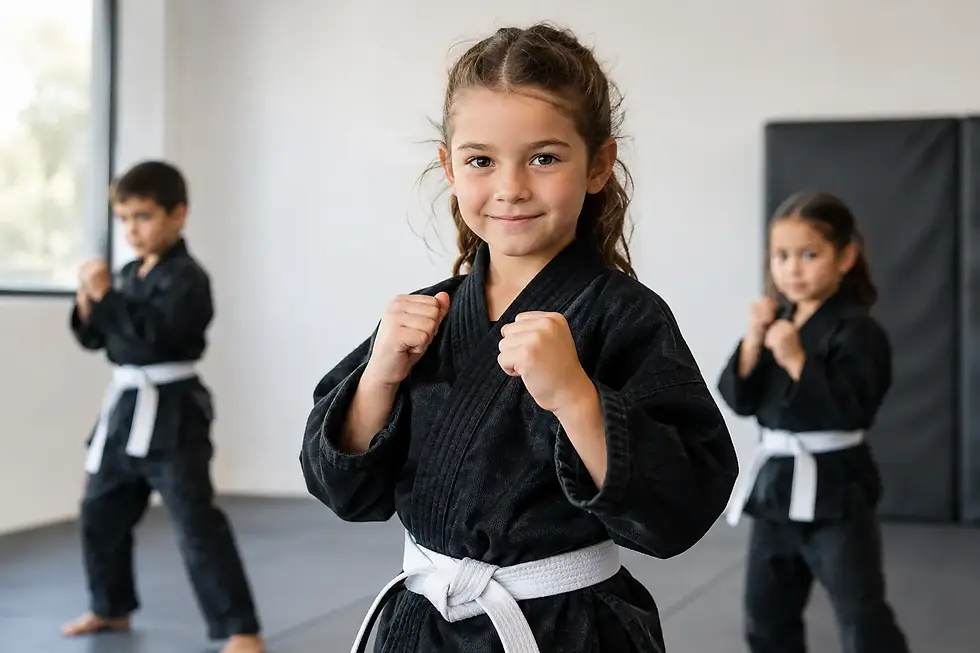
Martial arts training can support this learning when it is taught responsibly. At Outlaw MMA, children are encouraged to develop confidence, discipline, awareness and self-control in a safe, structured environment. Physical skills matter, but the greater lesson is knowing that strength includes staying calm, setting boundaries and choosing the safest response.
Build a trusted-adult network
Children should know that one trusted adult is good, but several are better. Help them identify a small group of people they can speak to if something is worrying them. This may include parents, grandparents, teachers, a club coach or another family member.
Make it clear that if the first adult does not understand, they should keep telling someone else. This is especially important for children who worry about causing trouble or who find it difficult to explain what happened. They do not need to tell the story perfectly to deserve help.
You can make this practical by asking, “Who could you talk to if I was not there?” Listen to their answers. If they name somebody unsuitable or do not know, use that as a gentle opportunity to create a clearer plan together.
Include online safety in the same conversation
Personal safety does not stop at the school gate. Children may be chatting, gaming and sharing content in spaces that feel private but are not. The same rules around boundaries, secrets and trusted adults apply online.
Teach your child never to share their full name, address, school, passwords, photographs or live location without your permission. They should know that people online are not always who they claim to be, even if they seem friendly or share the same interests.
Avoid making online safety only about punishment. If a child thinks their device will be taken away whenever something goes wrong, they may hide a problem. Instead, agree that they can show you any message, image or request that makes them feel uncomfortable. Praise them for speaking up, even if they have made a mistake.
As children get older, privacy and independence matter more. The right level of supervision depends on their age, maturity and the platforms they use. Keep communication open and review rules as they grow rather than relying on one conversation to cover everything.
Make safety practice calm and consistent
Children learn through repetition. Revisit personal safety in small doses, without turning every outing into a warning. Point out safe meeting places when you arrive somewhere busy. Ask what they would do if they lost sight of you. Celebrate sensible choices, such as coming back when agreed or telling you about something that felt odd.
Your own response matters too. When a child shares a concern, pause before reacting. Thank them for telling you, listen carefully and reassure them that they have done the right thing. If you appear shocked or angry, they may decide it is safer not to speak next time.
Personal safety is not a single lesson to tick off. It is a foundation built through trusted relationships, practical habits and growing confidence. Give your child the words, the permission and the support to act when something does not feel right, then keep showing them that you will listen.


Comments