%201.png)
.png)
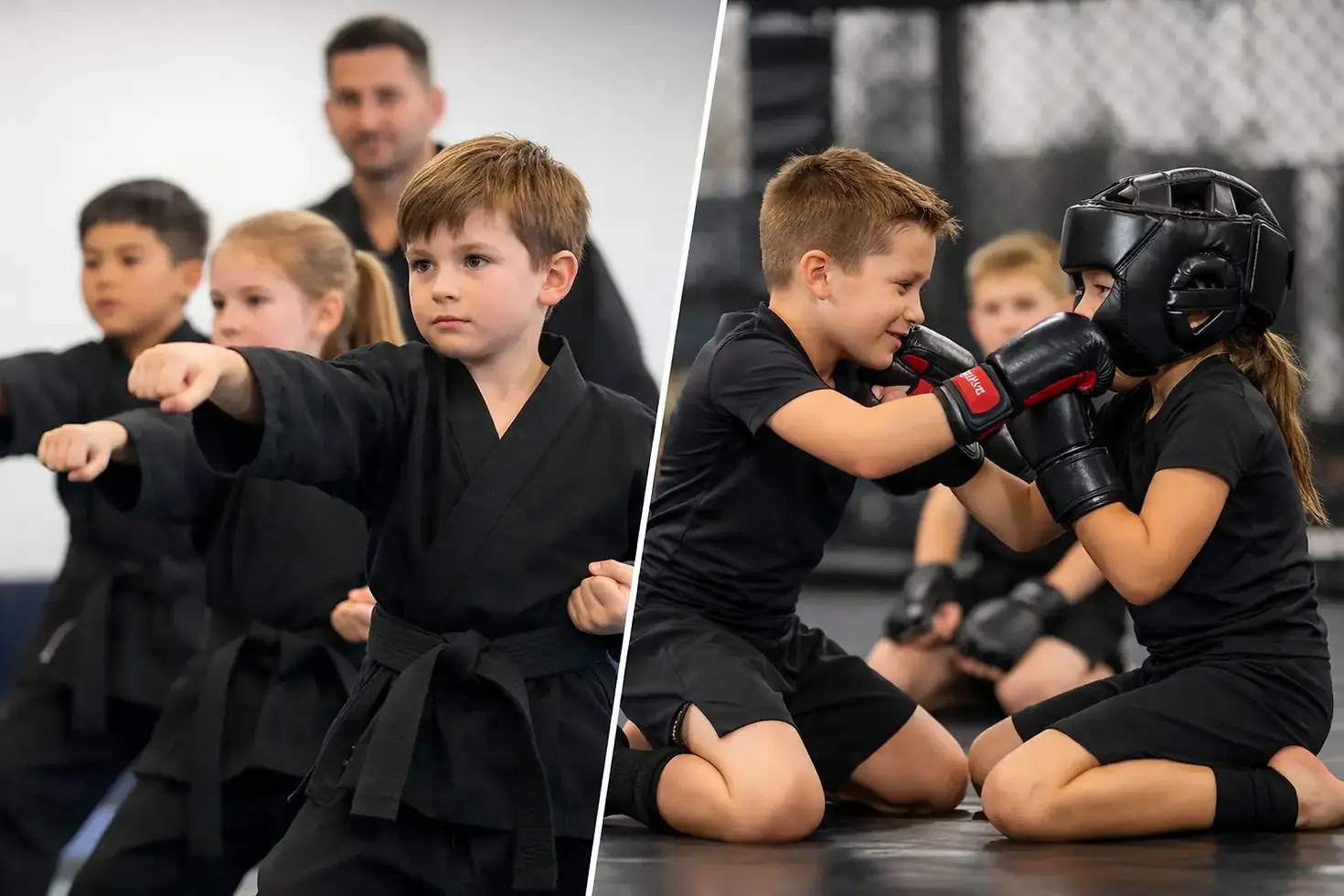
Kids Karate Versus MMA: Which Class Is Right?
- Mark Woodard
- 4 days ago
- 5 min read
A child stands a little taller after their first class. They have learned a new stance, listened carefully, worked with a partner and discovered that they can keep going when something feels difficult. That is the real decision behind kids karate versus MMA. Parents are not simply choosing between two sports. They are choosing the type of coaching environment, skills and confidence-building experience that will help their child progress.
Both karate and mixed martial arts can be outstanding choices for children. The better fit depends on your child’s personality, goals and the quality of the club in front of you. A calm, structured karate class may suit one child perfectly; another may thrive when learning a wider range of practical skills through a well-run junior MMA programme.
Kids karate versus MMA: the key difference
Karate is a traditional martial art with many different styles. Children commonly learn a clear syllabus of stances, blocks, strikes, movement patterns and, in many schools, kata - set sequences that develop memory, co-ordination and technical control. Progress is often marked by coloured belts, giving children regular, visible goals to work towards.
MMA means mixed martial arts. A children’s MMA class should not resemble an adult fight night, and a responsible gym never treats it that way. Instead, juniors learn age-appropriate elements from several disciplines. Depending on the programme and age group, this can include striking technique, movement, balance, wrestling-based control, safe falling, positional awareness and simple self-protection principles.
The practical difference is breadth. Karate usually develops depth within a particular system. Junior MMA introduces children to a broader toolkit and teaches them how different ranges of movement work together. Neither approach is automatically better. What matters is whether the teaching is safe, organised and right for the individual child.
What children gain from karate
Karate is often an excellent first activity for children who benefit from routine and clear expectations. The class format can be very reassuring: line up, warm up, practise technique, focus on a specific skill and work towards the next grading. For a child who likes knowing what comes next, that structure can build confidence quickly.
The technical precision of karate also teaches focus. A punch is not just a punch. Children learn posture, distance, balance, control and respect for their training partner. Repeating these details helps them see that progress comes through patience rather than instant perfection.
Many families value the traditional side of karate. Etiquette, discipline and respect are often woven into every lesson, not presented as an afterthought. Belt progression can be particularly motivating for younger children who need a tangible sign that their effort is paying off.
That said, karate clubs vary enormously. Some place greater emphasis on kata and traditional forms; others spend more time on partner drills and sparring. If self-defence is a central priority, ask how the club teaches children to manage distance, speak confidently, avoid trouble and respond safely under pressure.
What children gain from MMA
A quality kids MMA programme can be an engaging option for children who enjoy variety and active problem-solving. They may practise striking pads one moment, learn how to break a fall the next, then play a controlled movement game that improves balance and reactions. This variety can keep energetic children focused because every skill has a clear purpose.
MMA can also give children a more rounded understanding of personal safety. Real-life situations are unpredictable and usually do not look like a neat exchange of punches. Learning how to move away, maintain balance, control space, get up safely and seek help can be valuable alongside the confidence to use their voice.
There is a strong character-building element too. Partner work teaches children to stay composed, follow rules and recognise that control is strength. They learn to work with classmates of different sizes and abilities, without needing to prove themselves through aggression.
Some parents understandably hear “MMA” and worry that it will be too intense. That concern is worth taking seriously, which is why the coaching standard matters so much. Proper children’s MMA is supervised, progressive and centred on technique. Contact, if included, should be carefully managed for the age and experience of the group. Children should never be pushed into sparring before they are ready.
Self-defence is more than fighting
Parents often begin their search because they want their child to feel safer. That is a sensible goal, but the best self-defence lessons do not teach children to look for a fight. They teach awareness, boundaries and good judgement.
Whether your child chooses karate or MMA, look for a programme that explains when to move away, how to use a clear voice, why it is important to tell a trusted adult and how to avoid escalating a situation. Physical techniques have a place, but they are only one part of self-protection.
MMA may offer a wider range of physical responses because it includes standing and close-range movement. Karate may provide an excellent foundation in distance, posture and disciplined striking. In both cases, the goal should be the same: help children become calmer, more capable and less likely to panic when faced with a challenge.
Which class suits your child?
There is no need to choose based on which style sounds toughest. Start with your child. A quiet child may enjoy the predictable rhythm and individual focus of karate, but they may also come out of their shell in a friendly MMA class with supportive partner drills. An energetic child may love MMA’s variety, while another will gain exactly the focus they need from karate’s detail and routine.
Consider what will keep them attending after the excitement of the first few sessions. Consistency creates the biggest results. A child who looks forward to class, feels safe with the coach and can see their improvement is far more likely to develop confidence, fitness and resilience.
Age can influence the choice, although it should not decide it alone. Younger children need short, engaging activities, clear boundaries and plenty of positive reinforcement. Older children may be ready for more technical learning, goal setting and controlled challenge. The strongest clubs adapt their teaching rather than expecting every child to learn in the same way.
How to spot a good children’s martial arts class
The style on the timetable matters less than what happens on the mats. When you visit a class, notice whether the coach knows how to communicate with children. Instructions should be clear, encouraging and appropriate for the group’s age. Children should be corrected constructively, not shouted at or embarrassed.
Watch how partners are matched and supervised. A safe class has rules around contact, hygiene, behaviour and equipment. Coaches should create a welcoming atmosphere for complete beginners, including children who are nervous, less sporty or unsure about working with others.
It is also worth asking how progression works. Some children are motivated by belts and gradings; others respond well to skill goals, praise and growing responsibility. A good programme makes progress visible without turning every session into a competition.
Finally, pay attention to the feeling in the room. Are children engaged? Are they being challenged without being overwhelmed? Do parents seem comfortable? A positive martial arts community should help children feel that effort is recognised, mistakes are part of learning and everyone has a place.
The value of trying a class
A trial session often answers more than hours of online research. Your child may immediately enjoy karate’s formality and focused routines. Or they may light up at the variety, teamwork and practical movement of junior MMA. Their reaction matters, but so does how they feel afterwards: proud, safe, listened to and eager to return.
At Outlaw MMA, children’s training is built around self-protection, confidence, discipline and character development, with coaching that meets each child at their current level. The aim is not to make children aggressive. It is to give them the skills and belief to handle challenges with composure.
The right class is the one that gives your child a reason to keep showing up, practising and growing. Choose a coach who protects that enthusiasm, and the benefits will reach far beyond the training mats.


Comments